President Trump News in January: Political Developments and Policy Discussions

President Trump News in January: Key Political Developments

January saw several notable developments involving Donald Trump, who continues to play a major role in American politics. Political analysts, supporters, and critics closely followed his statements, campaign activities, and policy discussions as the political landscape in the United States evolves.

Trump Remains a Central Figure in U.S. Politics

Throughout January, Donald Trump remained one of the most discussed figures in the American political arena. His public appearances, speeches, and interviews generated widespread attention in both traditional media and online platforms.

Supporters continue to view Trump as a strong advocate for economic growth, border security, and changes to federal government policies. Meanwhile, critics and political opponents frequently debate his policy positions and leadership style.

Policy Discussions and Political Messaging

During January, Trump addressed several policy topics during rallies and public statements. Issues such as economic growth, immigration policy, trade, and national security were among the key themes discussed.

Trump’s messaging often focused on strengthening domestic manufacturing, reducing government regulations, and promoting policies that he argues would benefit American workers and businesses.

Media Attention and Public Debate

Media coverage surrounding Trump remained intense throughout the month. News outlets frequently reported on his speeches, interviews, and political strategy, reflecting his continuing influence in national political discussions.

Public reactions remain sharply divided. Supporters highlight his leadership and policy priorities, while critics challenge many of his positions and past actions.

Influence on the Political Landscape

Political analysts note that Trump’s presence continues to shape the broader political environment in the United States. His endorsements, statements, and campaign activities often influence political debates within his party and across the national political spectrum.

Many candidates and political groups still align themselves either in support of or opposition to Trump’s policy positions.

Outlook for the Year Ahead

Looking ahead, Trump is expected to remain an influential voice in American politics. Key factors that could shape political discussions during the year include:

  • Major policy debates in Washington
  • Campaign activities and political rallies
  • Media coverage and public opinion trends
  • Developments within both major U.S. political parties

As the political environment continues to evolve, Donald Trump’s role in shaping public debate and political strategy is likely to remain significant.

Google’s AI Pro Plan: Features, Pricing, and What It Means for Users

Google’s AI Pro Plan Explained

Google has expanded its artificial intelligence offerings with the launch of the AI Pro plan, a premium subscription designed for professionals, creators, and businesses that require more powerful AI capabilities. As competition in the AI market intensifies, Google’s AI Pro plan positions itself as a high-performance solution within the Google ecosystem.


What Is Google’s AI Pro Plan?

The Google AI Pro plan is a paid subscription tier that provides enhanced access to Google’s AI models, including advanced versions of Gemini AI, along with increased usage limits and priority performance.

Unlike free AI tools, the Pro plan focuses on productivity, reliability, and scalability, making it suitable for users who rely on AI for daily work.


Key Features of Google’s AI Pro Plan

Google’s AI Pro plan includes several benefits aimed at power users:

🚀 Advanced AI Models

Subscribers gain access to more capable AI models with improved reasoning, longer context windows, and higher accuracy for complex tasks such as coding, research, and data analysis.

📈 Higher Usage Limits

The Pro plan significantly increases prompt, file upload, and output limits compared to free tiers, allowing uninterrupted workflows for intensive projects.

🧠 Enhanced Productivity Tools

Google integrates AI Pro features across its ecosystem, including:

  • AI-assisted writing and summarization
  • Code generation and debugging
  • Data interpretation and spreadsheet analysis
  • Image and content generation tools

⚡ Priority Performance

Pro users benefit from faster response times and prioritized access during peak demand, ensuring consistent performance when it matters most.

Musk and Tesla 2025: Innovation, Challenges, and the Road Ahead

Meta Description:
Elon Musk’s Tesla continues to lead the EV market in 2025 with AI-driven vehicles, new factories, and global expansion plans — but faces growing competition and regulatory challenges. Here’s the latest Tesla news.


Tesla 2025: Musk’s Vision Moves Forward

Tesla CEO Elon Musk remains at the center of the global electric vehicle (EV) conversation as the company continues to expand production, advance autonomous driving, and explore new energy solutions. Despite market volatility and increased competition, Tesla in 2025 still leads the EV industry with innovation, scale, and ambition.

Musk’s latest statements suggest Tesla is pushing toward a fully autonomous driving system, powered by its advanced Full Self-Driving (FSD) software and custom-built Dojo supercomputer. This AI-driven infrastructure is designed to process massive amounts of real-world driving data, helping Tesla’s vehicles learn faster and safer than ever before.


New Models and Expanding Factories

Tesla’s production roadmap for 2025 includes new updates across its lineup:

  • Tesla Model 3 “Highland+” with improved range, quieter cabin, and upgraded design.
  • Tesla Cybertruck global rollout, after successful launches in the U.S. and Canada.
  • Next-Gen Tesla Model 2, an affordable compact EV rumored to be priced under $30,000.

At the same time, Tesla is accelerating construction at Gigafactories in Mexico and India, aiming to boost production capacity and reduce logistics costs. The company’s long-term goal is to reach 20 million vehicles per year by 2030, a milestone that would reshape the automotive industry.


AI, Robotics, and Energy Expansion

Beyond cars, Musk continues to push Tesla into AI and robotics. The Tesla Optimus robot project is progressing, with prototypes already performing warehouse tasks. Meanwhile, Tesla Energy is expanding its solar and Powerwall business, targeting sustainable energy adoption in both residential and industrial markets.

Tesla’s growing influence in the AI chip market through Dojo also signals Musk’s broader ambition — merging mobility, robotics, and renewable energy into one intelligent ecosystem.


Challenges Ahead

Despite its progress, Tesla faces increasing pressure:

  • Intensifying competition from BYD, Rivian, and traditional automakers’ EV divisions.
  • Regulatory scrutiny over FSD safety and autonomous driving claims.
  • Supply chain challenges related to lithium, nickel, and semiconductor production.
  • Investor concerns about Musk’s focus being divided among Tesla, X (formerly Twitter), SpaceX, and xAI.

Still, Tesla’s financial performance remains strong, with record revenues in 2025 driven by robust EV sales and energy storage deployments.


Final Thoughts

Elon Musk’s Tesla continues to define the future of transportation and sustainable energy. With its focus on AI innovation, manufacturing efficiency, and affordability, Tesla aims to stay ahead in a rapidly changing industry.

Whether through self-driving breakthroughs or next-generation EVs, Musk’s Tesla remains one of the most closely watched and influential companies shaping the modern world.

Tags:
Elon Musk, Tesla, Tesla News, EV Market, Electric Vehicles, Tesla Model 3, Tesla Cybertruck, Tesla AI, Tech News, Sustainable Energy

The Universal Translator: How Apple, Google, and Meta Are Making Sci-Fi a Reality

In 2025, these companies are racing to perfect real-time translation technology, and their latest gadgets are bringing us closer than ever to a world where language is no longer a barrier. Here’s how they’re doing it—and what it means for the future of global communication.


🚀 The Sci-Fi Dream Becomes Reality

For decades, universal translators existed only in novels and TV shows. But advancements in generative AI, sparked by tools like ChatGPT, have finally made real-time language translation possible. Apple, Google, and Meta are now integrating these capabilities into hardware millions of people use daily:

1. Apple’s AirPods Pro 3: Live Translation

Apple’s latest AirPods Pro 3 feature Live Translation, a system that translates spoken foreign languages directly into the user’s ear almost instantaneously.

  • How it works: During a demo, an English-speaking tourist heard a Spanish florist’s words translated clearly into English in real-time.
  • Languages supported: Currently handles French, German, Portuguese, and Spanish, with more likely added soon.
  • Bidirectional conversations: When two people wear AirPods, translations happen simultaneously for both speakers.

2. Google’s Pixel 10: Voice Translate

Google’s Pixel 10 introduces Voice Translate, which translates phone calls while preserving the speaker’s vocal inflections.

  • Voice mimicry: In a demo, Jimmy Fallon’s sentence was translated into Spanish while retaining his signature comedic tone.
  • Software-driven: This feature rolls out via a software update, making it accessible to existing Pixel users.

3. Meta’s Ray-Ban Glasses: On-Screen Translations

Meta’s smart glasses use built-in speakers and displays to translate conversations.

  • Real-time transcription: Translations appear on the user’s phone screen during conversations.
  • Next-gen plans: Meta’s upcoming smart glasses are expected to enhance this feature further.

🔥 Why Translation Is Tech’s New Battleground

Translation has emerged as a key area of competition because AI is now advanced enough to process languages as quickly as people speak. Analysts believe features like Live Translation could drive significant hardware upgrades, especially as they integrate with broader AI ecosystems like Apple Intelligence.

For travelers, business professionals, and multilingual families, this technology promises to revolutionize everyday interactions.


🌍 The Future of Universal Translation

While current technology is impressive, it’s still evolving. Future iterations may include:

  • More languages: Expanding beyond major languages to include dialects and less commonly spoken tongues.
  • Context-aware translations: AI that understands cultural nuances and idiomatic expressions.
  • Augmented reality integration: Translations overlay directly onto real-world objects through AR glasses.

💡 Conclusion: A World Without Language Barriers

Apple, Google, and Meta are leveraging AI to turn science fiction into tangible technology. While we’re not quite at Star Trek levels yet, these innovations are already making cross-language communication more accessible. As these tools evolve, they could fundamentally reshape how we connect across cultures.

Lenovo IdeaPad Flex 5 (2023-2024) Deep Review: The Ultimate Budget 2-in-1?

Meta Description: Unbiased Lenovo IdeaPad Flex 5 review covering performance, battery life, display, pros/cons, and who should buy this budget 2-in-1 laptop. SEO-optimized analysis.


💡 Design & Versatility: More Than Just a Laptop

The Flex 5’s 360-degree hinge transforms it from laptop to tablet/tent mode, offering flexibility for studying, presentations, or media consumption. Though not the lightest (3.3–4.6 lbs), its soft-touch graphite gray or platinum chassis feels durable for the price. Ports impress with 2x USB-A, USB-C, HDMI 1.4b, and a full-size SD reader—a rarity in budget convertibles .

Drawback: Thicker than premium rivals like Dell XPS 13 2-in-1 (0.74″ vs. 0.58″).


🖥️ Display & Touch Experience: Brightness Woes, But Great Responsiveness

Most configurations feature a 14″ FHD (1920×1080) IPS touchscreen with accurate 10-point touch support. However, the 250-nit brightness is a key weakness—struggling in sunlit rooms 28. Higher-end models (2024) offer optional 2.2K/100% sRGB panels, significantly improving color accuracy .

  • Pen Support: Includes Lenovo Digital Pen (sold separately) with 4,096 pressure levels—ideal for note-taking or sketches .

⚡ Performance: Ryzen Power on a Budget

Equipped with AMD Ryzen 5/7 5000U/7000U series CPUs, the Flex 5 punches above its weight:

  • Multicore Dominance: Ryzen 5 5500U sustains 2.98 GHz @ 30W under sustained load, beating Intel i5 equivalents in video rendering.
  • Integrated Radeon Graphics: Handles light gaming (e.g., CS:GO at 40 FPS) and photo editing.
  • 16GB RAM + 512GB SSD: Standard on mid-tier models for smooth multitasking .

Cooling Note: Stays quiet under load, but keyboard temps hit 48.8°C during intensive tasks.


🔋 Battery Life & Charging: All-Day Potential

With a 52.5Wh battery, expect 11–13 hours of web browsing (120-nit brightness)—outlasting many Ultrabooks 13. Real-world use drops to 5–7 hours for video/office work.

  • Charging Limitation: Lacks USB-C charging on older models; requires proprietary barrel plug.

⌨️ Input & Audio: Typing Joy, Mediocre Sound

  • Keyboard: Backlit keys with 1.5mm travel and crisp feedback—reminiscent of pricier ThinkPads 38.
  • Touchpad: Smooth Mylar surface with precise tracking.
  • Speakers: Dual 2W drivers deliver “clear but thin” audio; lack bass for movies.

⚠️ Key Limitations

  1. Upgradeability: RAM is soldered; only one M.2 slot for SSD upgrades.
  2. Display Brightness: Base models dim for outdoor use.
  3. Gaming Capability: Struggles with AAA titles (e.g., Cyberpunk 2077) .
  4. Webcam: 720p with noisy images—rely on the physical privacy shutter for security.

🎯 Who Should Buy It? (And Who Shouldn’t)

Ideal For:

  • Students: Budget-friendly ($549–$849), durable, and versatile for lectures/notes.
  • Casual Creators: Handles Photoshop/Lightroom with Ryzen 7 + 16GB RAM.
  • Travelers: 360° modes adapt to planes/cafes; 13+ hr battery for flights .

Avoid If:

  • You need high brightness for outdoor work.
  • You’re a gamer or 4K video editor.
  • You require upgradeable RAM.

💰 Value Verdict: Best Budget 2-in-1?

Yes—with caveats. At $600–$800, the Flex 5 delivers exceptional versatility and Ryzen power unmatched by rivals like ASUS Vivobook S15 or Yoga C740 8. Its flaws (display, speakers) are typical for the price, but the hinge durability, pen support, and 16GB RAM configurations make it a steal for students and hybrid workers.

Deal Alert: Look for Prime Day/Black Friday sales where prices drop below $600 .

Alternatives:

  • For brighter displays: HP Envy x360 (400-nit).
  • For gaming: Acer Aspire 7 (GTX 1650).

Final Thought: The Flex 5 isn’t glamorous, but it nails the essentials: reliable performance, flexible usability, and survival-grade battery life. If your budget is tight but your needs aren’t, this 2-in-1 is a savvy buy 👍.

P.S. Always configure with 16GB RAM—the soldered memory makes future upgrades impossible! 

Tags: Lenovo IdeaPad Flex 5 review, budget 2-in-1 laptop, Ryzen 5 laptop, convertible laptop, student laptop, touchscreen laptop, Flex 5 battery life, Flex 5 gaming, laptop value comparison

Android Users Can Now Edit Messages Sent to iPhones via Google Messages – Here’s How

In a major step toward seamless cross-platform communication, Google has introduced a feature that allows Android users to edit messages sent to iPhone users through Google Messages. This update is part of a larger movement to improve the messaging experience between Android and iOS devices.

But how does this work—and why is it possible now?

Android Users Can Now Edit Messages Sent to iPhones via Google Messages – Here’s How

Why It’s Now Possible: The RCS and iMessage Shift

The short answer: RCS (Rich Communication Services) is becoming the new standard, and Apple is finally adopting it.

Apple announced that it will begin supporting RCS on iPhones in late 2024, allowing for improved communication between Android and iPhone devices. RCS offers features like read receipts, typing indicators, high-quality media sharing—and yes, message editing.

Until now, Android and iOS communication was limited to basic SMS/MMS, which lacked these modern features. With RCS, messages sent from an Android phone to an iPhone will go through a more advanced protocol, similar to iMessage, enabling enhanced features like editing.


How Android Users Can Edit Messages Sent to iPhones

Here’s how the editing feature works in Google Messages:

  1. Send a Message: Send your message as usual using Google Messages on your Android device.
  2. Long-Press to Edit: Tap and hold the message you want to edit. If it’s within the editable time window (usually a few minutes), you’ll see an “Edit” option.
  3. Make Changes: Tap “Edit,” rewrite the message, and press send.
  4. Updated for Both Sides: If the iPhone user is on the latest iOS with RCS support enabled, they will see the edited message, not the original version.

⚠️ Note: This feature only works if both users have RCS enabled and are using the latest versions of Google Messages and iOS.


What This Means for Messaging in 2025

This update marks a pivotal change in how Android and iPhone users communicate. It’s no longer just about emojis or reactions—features like message editing bring the two platforms closer than ever before.

This is also a big win for users tired of the “green bubble vs. blue bubble” divide, helping reduce friction in mixed-device conversations.


Final Thoughts

The ability for Android users to edit messages sent to iPhones is just the beginning. As RCS adoption grows, we can expect even more iMessage-like features to appear in Google Messages, creating a more unified messaging experience for everyone—regardless of the device they use.

All right reserved!

Meta Description: Android users can now edit messages sent to iPhones using Google Messages. Learn how this works with RCS and what it means for cross-platform messaging.

Tags: Android, Google Messages, iPhone, Message Editing, RCS, Cross-Platform Messaging, iMessage, Tech News 2025

From: https://www.batteryer.sg/blog

Microsoft Unveils AI-Powered Upgrades Across Windows and Office Suite in 2025 Update

Microsoft has officially rolled out its highly anticipated 2025 software update, introducing groundbreaking AI enhancements across Windows 11, Microsoft Office, and Teams. The update builds on the company’s “Copilot” initiative, bringing deeper integration of generative AI to streamline workflows and boost productivity for users worldwide.

Microsoft Unveils AI-Powered Upgrades Across Windows and Office Suite in 2025 Update

AI Copilot Expands Across Microsoft Products

In the latest update, Microsoft Copilot becomes even more intelligent and context-aware. Windows 11 users now have access to AI assistance embedded in the Start Menu, File Explorer, and Settings. Meanwhile, Office apps like Word, Excel, and PowerPoint offer new natural language prompts, auto-formatting, and data analysis powered by Azure OpenAI technology.

Key Features in the 2025 Update

  • Windows Copilot Sidebar: Now available natively across all modern Windows 11 devices, providing real-time suggestions, file summaries, and task automations.
  • Office 365 Smart Compose: AI-driven writing support, improved auto-correct, and content generation tools integrated directly into Word and Outlook.
  • Excel AI Charts & Forecasting: Users can now generate complex data visualizations and trend predictions with one click.
  • Teams AI Summaries: Meetings are automatically transcribed, summarized, and action items highlighted—saving hours of manual follow-up.

Global Rollout and Availability

The update is being pushed globally starting June 28, 2025, and will be available to all Microsoft 365 subscribers and Windows 11 users. Enterprise customers can enable features through Microsoft Endpoint Manager, while individual users will receive updates via Windows Update and Office Auto-Update.

Enterprise and Consumer Implications

This release reflects Microsoft’s long-term strategy to embed AI deeply into its ecosystem, enabling smarter workflows without steep learning curves. The new features especially benefit remote workers, data analysts, and content creators by reducing repetitive tasks and increasing efficiency.

Microsoft’s AI Strategy Going Forward

CEO Satya Nadella emphasized Microsoft’s commitment to “responsible AI” and announced further investments in Azure AI infrastructure, ensuring scalability and privacy. The company is expected to preview new developer tools and APIs at the upcoming Microsoft Ignite 2025 conference.


Conclusion:

Microsoft’s 2025 update represents a major leap forward in real-world AI integration. As user expectations evolve, the company remains focused on delivering intuitive, powerful, and secure AI solutions for both individual and enterprise users.

From: Marking Paint  https://www.marking-paint.com

Trump’s Iran Nuclear Deal: Latest Updates, Impact, and What’s Next

Introduction

The Iran nuclear deal has been a focal point of global politics, and former President Donald Trump’s approach significantly reshaped U.S. policy. With ongoing tensions and negotiations, understanding Trump’s stance, the current status of the deal, and future implications is crucial. This blog post covers the latest developments, key decisions, and what they mean for global security.


1. Trump’s Iran Nuclear Deal Policy: A Recap

In 2018, President Trump made headlines by withdrawing the U.S. from the Joint Comprehensive Plan of Action (JCPOA), commonly known as the Iran nuclear deal. His administration reinstated harsh sanctions, arguing that the original agreement failed to curb Iran’s nuclear ambitions sufficiently.

Key Actions Under Trump:

  • Reimposed sanctions on Iran’s oil, banking, and energy sectors.
  • Implemented a “maximum pressure” campaign to force Iran back into negotiations.
  • Ordered the strike that killed General Qasem Soleimani (2020), escalating tensions.

2. Biden’s Approach vs. Trump’s Legacy

Since taking office, President Joe Biden has sought to revive the nuclear deal, but challenges remain:

  • Indirect talks between the U.S. and Iran have stalled multiple times.
  • Iran’s uranium enrichment has reached near-weapons-grade levels.
  • Trump and GOP critics argue that rejoining the deal would be a mistake, favoring continued sanctions.

Could Trump’s Policies Return in 2025?

If Trump wins the 2024 election, experts predict:
✔ A return to maximum pressure tactics
✔ Stricter sanctions and no return to JCPOA
✔ Potential escalation in U.S.-Iran tensions


3. Latest Developments in 2024

Recent reports suggest:

  • Iran is closer than ever to nuclear breakout capability.
  • Israel and Gulf states urge tougher measures against Iran.
  • Russia and China continue supporting Iran economically.

Global Reactions:

  • Europe seeks diplomacy but grows impatient with Iran’s demands.
  • Middle East allies (Israel, Saudi Arabia) prefer Trump’s hardline stance.
  • Oil markets remain sensitive to U.S.-Iran tensions.

4. What’s Next for the Iran Nuclear Deal?

The future of the deal depends on:

  • 2024 U.S. election results (Biden’s diplomacy vs. Trump’s sanctions).
  • Iran’s willingness to comply with nuclear restrictions.
  • Potential military conflict if diplomacy fails.

Conclusion

Trump’s withdrawal from the Iran nuclear deal reshaped Middle East geopolitics, and its future remains uncertain. With the 2024 election looming, the U.S. could either return to diplomacy or double down on sanctions.

Stay updated on this developing story—subscribe for the latest geopolitical news!

Sponsor:From: Marking Paint  https://www.marking-paint.com

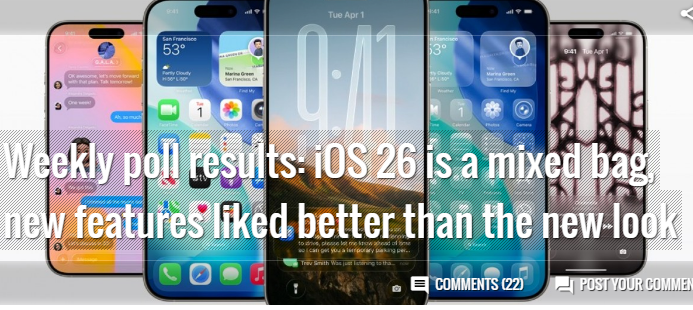
Apple iOS 26: Features, Release Date, and Everything You Need to Know

Discover the new features of Apple iOS 26. Learn about the iOS 26 release date, device compatibility, Siri upgrades, and Apple Intelligence-powered tools. Stay updated with the latest iPhone software news.

Discover the new features of Apple iOS 26. Learn about the iOS 26 release date, device compatibility, Siri upgrades, and Apple Intelligence-powered tools. Stay updated with the latest iPhone software news.

Apple continues to redefine mobile experiences with the announcement of iOS 26, its latest operating system for iPhones. Packed with AI-powered features, deeper personalization, and improved privacy, iOS 26 is designed to deliver a smarter and more seamless experience across all supported devices.

If you’re searching for the latest iOS 26 features, release details, and device compatibility, this blog post covers everything you need to know about Apple’s next-gen iPhone software update.


📅 iOS 26 Release Date

Apple officially unveiled iOS 26 during WWDC 2025 (Worldwide Developers Conference) on June 10, 2025.

Key iOS 26 Timeline:

  • June 10, 2025 – Developer Beta released
  • July 2025 – Public Beta expected
  • September 2025 – Final version to launch alongside iPhone 17

🔍 iOS 26 Key Features

Here are the top iOS 26 features that are getting attention:

1. Apple Intelligence (AI Integration)

iOS 26 is Apple’s first system-wide release with deep integration of its new Apple Intelligence suite.

  • Context-aware Siri with on-device processing
  • Smart Summaries in Mail, Notes, and Safari
  • AI-assisted photo editing
  • Natural language voice commands

2. Smarter Siri with ChatGPT Support

Siri now integrates ChatGPT-style capabilities to generate responses, summarize messages, and even write emails—all while preserving user privacy.

3. Revamped Control Center

Control Center in iOS 26 is now customizable. Users can rearrange, resize, and group controls for a more personalized experience.

4. Live Voicemail Translation

iOS 26 offers real-time voicemail transcription and translation, allowing users to read or hear messages in their preferred language instantly.

5. New Lock Screen Widgets and Styles

Apple brings enhanced lock screen customization:

  • Interactive widgets
  • Always-On Display improvements
  • AI-generated wallpapers

6. Focus Modes 2.0

A major upgrade to Focus Modes lets users schedule custom modes with smart automation based on time, location, or app activity.

7. Privacy and Security Enhancements

  • Private Cloud Compute ensures AI features don’t compromise personal data.
  • App Tracking Protection is stronger, with more user controls.

📱 iOS 26 Supported Devices

Apple maintains a strong support line for older devices. iOS 26 is compatible with:

  • iPhone 15 / 15 Pro / 15 Pro Max
  • iPhone 14 / 14 Pro / 14 Plus
  • iPhone 13 / 13 Mini
  • iPhone SE (3rd Gen)
  • iPhone 12 and newer

Note: Some AI features require A17 chip or later (iPhone 15 Pro+ and iPhone 16/17 series).


💡 iOS 26 for Developers and Power Users

For developers, iOS 26 opens new APIs for:

  • On-device AI tasks
  • Live Activities integration
  • Deep widget interactivity
  • Vision Pro continuity with iPhone apps

Tags:

iOS 26, Apple iOS 26 update, iOS 26 release date, iOS 26 features list, Apple Intelligence, Siri AI, iPhone 17, Apple WWDC 2025

Trump maintains control of National Guard in Los Angeles for now after appeals court ruling

📰 Appeals Court Allows Trump to Retain Control of National Guard in LA

An emergency ruling by the 9th U.S. Circuit Court of Appeals has temporarily paused a lower court order that would have returned control of the California National Guard to Governor Gavin Newsom. This means:

  • President Trump retains command of approximately 4,000 federalized National Guard troops stationed in Los Angeles.
  • The lower court, led by Judge Charles Breyer, had declared the deployment illegal—citing violations of the Tenth Amendment and statutory overreach under the Insurrection Act. Judge Breyer said Trump failed to justify that there was a “rebellion” or a federal law enforcement inability.
  • The appeals court’s decision is a temporary stay, not a final ruling—it simply delays Breyer’s order until a full appellate hearing scheduled for Tuesday.

🔍 What’s at Stake

SideArgument
California (Gov. Newsom)Asserts deployment violated the Tenth Amendment and exceeded federal authority, labeling it “unwarranted federal intrusion.” Claimed local law enforcement was adequate and that federal troops performing police duties would violate the Posse Comitatus Act.
Trump AdministrationAsserts authority under the Insurrection Act and Title 10, arguing the deployment was lawful to protect federal property/personnel and that communication with state officials occurred.

⚠️ Broader Implications

  • Federal-State Power Struggle: The clash highlights a constitutional battle between federal authority and state sovereignty—with California pushing back against unilateral federal power.
  • Precedent for Domestic Military Use: Deploying National Guard forces, and potentially Marines, for immigration-related unrest raises concerns about militarizing civil spaces—a move rarely seen in modern U.S. history. The last similar case came in 1965.
  • Escalation Potential: With the appellate fight ongoing, calls have begun for possible invocation of the Insurrection Act or more aggressive federal intervention. Tensions over immigration policy and protests are escalating.

🔮 What Comes Next

  • Tuesday: The 9th Circuit will hear full arguments on whether Trump lawfully federalized the Guard.
  • Depending on the outcome, the case could advance to the U.S. Supreme Court, especially given its constitutional significance.

Bottom Line

For now, Trump legally keeps command of the National Guard in LA—but the decision is a temporary reprieve. The case underscores a fierce constitutional showdown over whether the federal government can override state authority to deploy military forces domestically under the Insurrection Act.

All right reserved!

From: https://www.batteryer.sg/blog